Azodicarbonamide (E927a): Why Is The 'Yoga Mat Chemical' In My Burger Bun?
TL;DR
Azodicarbonamide (ADA or E927a) is used to bleach flour and condition dough, making commercial bread fluffier. It is famously used in the production of foamed plastics (like yoga mats and sneaker soles). It is banned as a food additive in the European Union, Australia, and many other countries due to respiratory health risks and potential carcinogens. Kale rates it as Avoid (Red).
What is Azodicarbonamide (E927a)?
Azodicarbonamide is a chemical compound used in two very different industries:
- Plastics: It acts as a "blowing agent" to create foam rubber (yoga mats, shoe soles, insulation).
- Food: It acts as an oxidizing agent in flour, making dough rise higher, stronger, and faster.
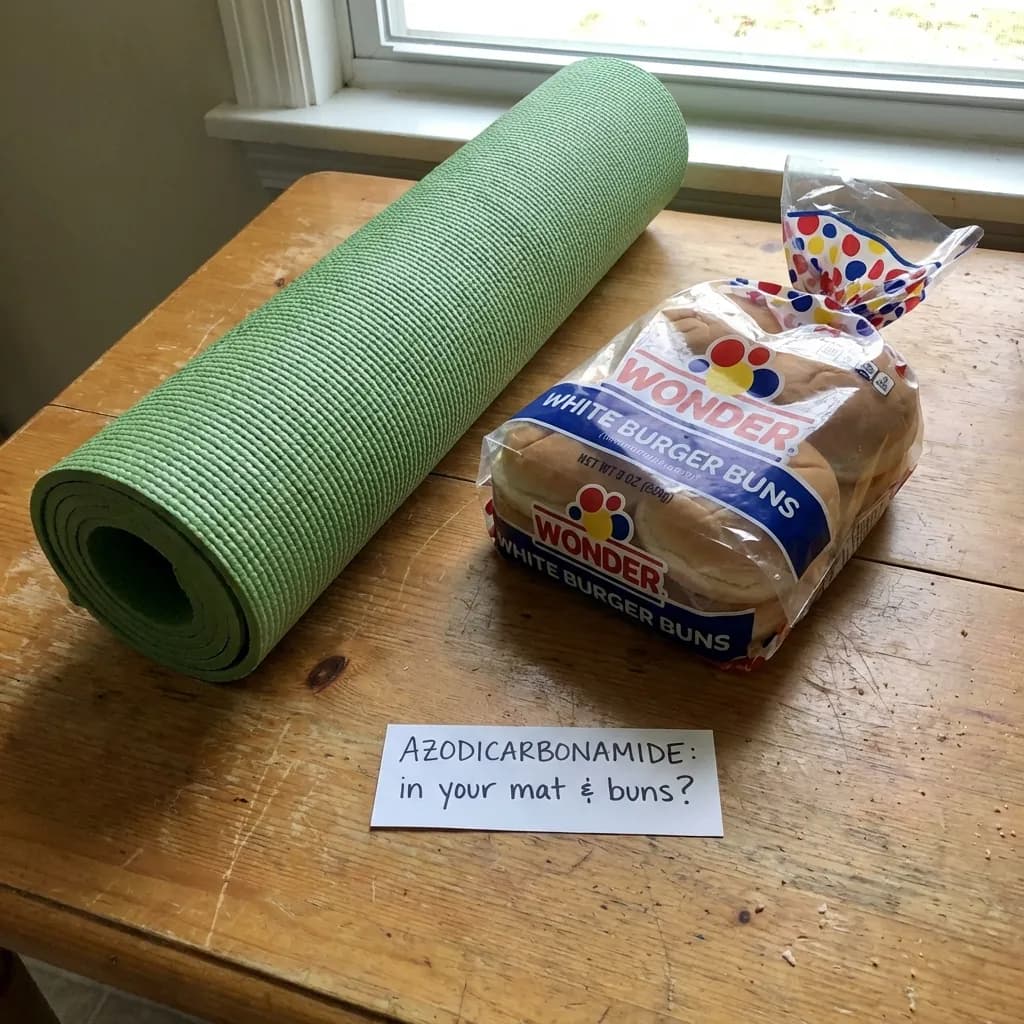
Essentially, the same chemical that creates the bubbles in your yoga mat helps create the bubbles in your burger bun.
Where is it found?
In the US, it's primarily found in refined white flour products.
- Fast Food Buns: Many major chains have phased it out due to public pressure, but it still often lurks in lesser-known menu items.
- Sliced Bread: Cheap white breads and hot dog buns.
- Frozen Dough: Pre-made pizza crusts and pastries.
- Tortillas: Flour tortillas often use it for texture.
- Croutons: Packaged salad toppings.
Health Concerns
1. Respiratory Issues
The primary danger of ADA is inhaled exposure, which is why it is strictly regulated in workplace settings. It is a known respiratory sensitizer that can cause asthma and allergic reactions. While eating it is different from breathing it in a factory, the connection to respiratory toxicity is enough for many countries to ban it.
2. Semicarbazide (Possible Carcinogen)
When baked, azodicarbonamide breaks down into semicarbazide (SEM). Semicarbazide has been shown to cause tumors in female mice and is considered a weak carcinogen.
This breakdown product is the main reason why the European Union and others have banned ADA in food. They operate on the principle that if an additive might cause cancer and is purely cosmetic (making bread whiter/fluffier), it's not worth the risk.
3. "Dirty" Manufacturing
Like many synthetic additives, it represents a highly processed chemical supply chain. If you are eating bread with ADA, you are likely also consuming bromates, refined sugars, and zero fiber. It is a marker of low-quality, ultra-processed food.
Kale's Verdict: Avoid (Red)
Kale rates E927a (Azodicarbonamide) as Avoid (Red).
It is banned in Europe, Australia, and Singapore (where using it in food can result in a 15-year jail sentence!). The FDA is one of the few major regulatory bodies that still permits it.
There is absolutely no need for it. Flour can be aged naturally or treated with safer alternatives like ascorbic acid (Vitamin C) to achieve the same results.
How to Avoid It
- Read the Label: Look for "Azodicarbonamide" or "ADA" in the ingredients list, usually near the end.
- Scan with Kale: We flag it instantly as a high-risk additive.
- Buy Organic: ADA is not allowed in certified organic products.
- Choose "Unbleached" Flour: Products made with unbleached flour are less likely to rely on chemical conditioning agents.
Final Thoughts
You should be able to do yoga on your mat, not eat the chemicals used to make it. The fact that this additive is treated as a criminal offense in Singapore but a standard ingredient in the US highlights a major gap in our food safety regulations. Stick to real bread made with simple ingredients: flour, water, salt, and yeast.
Is your sandwich bread safe? Download Kale to check for the "yoga mat chemical" today.
Make healthier food choices
Download Kale to scan barcodes and understand what's in your food.
Download for iOS