Cyclamate (E952): The Sweetener That Was Banned, Then Unbanned (But Only Usually)
TL;DR
Cyclamate (E952) is a calorie-free artificial sweetener that is 30-50 times sweeter than sugar. It was banned in the United States in 1969 after studies linked it to bladder cancer in rats. Surprisingly, it is still legal and widely used in Canada, Europe, and over 130 other countries. Due to this conflicting safety data and the potential cancer risk, Kale rates it as Avoid (Red).
What is Cyclamate (E952)?
Sodium cyclamate (or calcium cyclamate) is a synthetic sweetener discovered in 1937. It has a slow onset of sweetness and tends to mask the bitter aftertaste of other sweeteners like saccharin or aspartame. That's why it's almost always found in a blend (like "Sweet'N Low" in countries where it's legal).
Where is it found?
If you live in the US, you won't find it on grocery store shelves.
However, if you travel to Canada, Europe, Mexico, or South America, you will find it everywhere:
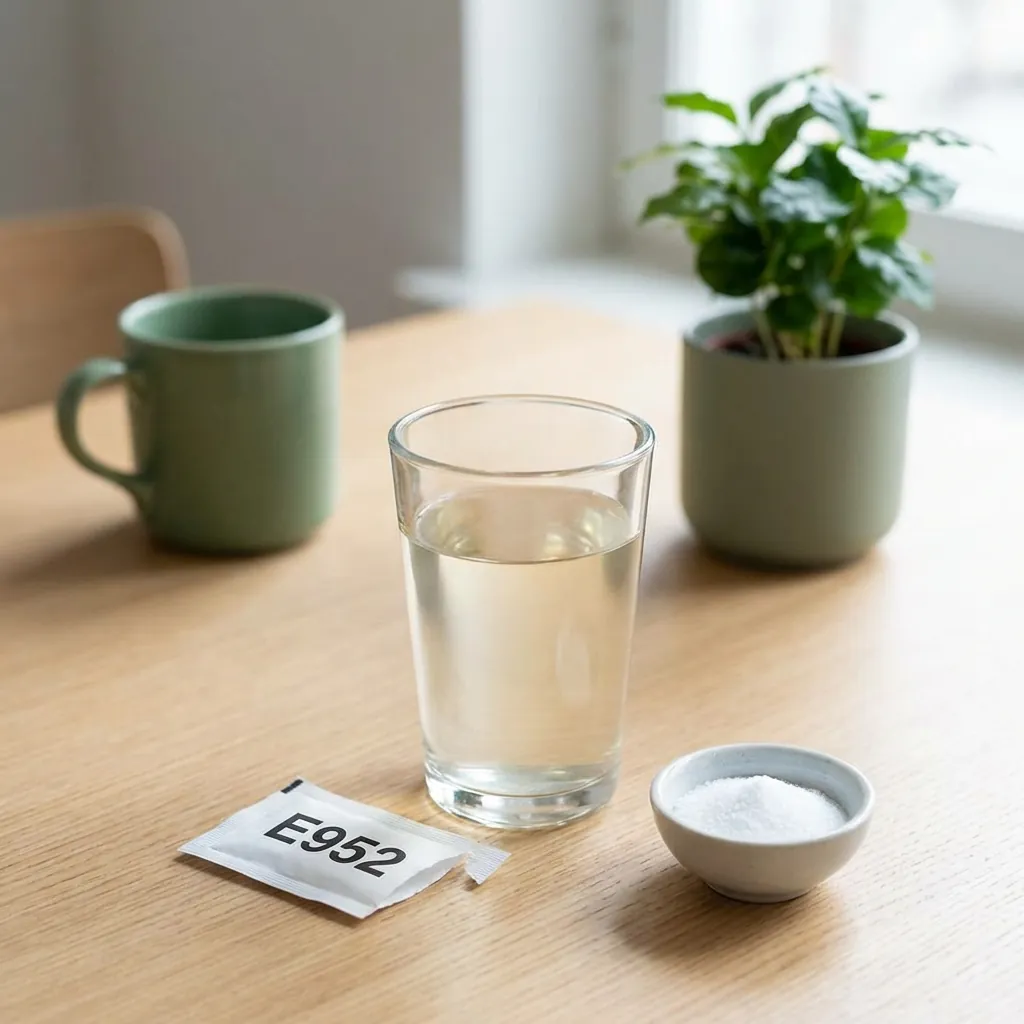
- Tabletop Sweeteners: The pink or blue packets commonly found in cafes (e.g., Sweet'N Low, Sugar Twin).
- Diet Sodas: Many "Zero Sugar" drinks outside the US use a blend of cyclamate and saccharin.
- Sugar-Free Gum & Candy: Used for its heat stability and taste profile.
Health Concerns
1. Bladder Cancer
The 1969 ban in the US was triggered by a study showing that a mixture of cyclamate and saccharin causing bladder tumors in rats. While subsequent studies have failed to consistently replicate this in humans, the FDA has upheld the ban for over 50 years, citing unresolved safety concerns.
2. Male Reproductive Toxicity
More recent concerns have focused on cyclamate's potential effect on male fertility. Some studies suggest that its breakdown product, cyclohexylamine, may cause testicular atrophy and sperm damage. This is why some countries have set strict daily intake limits, even if they haven't banned it outright.
3. Gut Microbiome
Like other artificial sweeteners, there is emerging evidence that cyclamate may negatively alter the gut microbiome, potentially affecting metabolism and glucose tolerance. This is ironic for a product designed for diabetics.
Kale's Verdict: Avoid (Red)
Kale rates E952 (Cyclamate) as Avoid (Red).
The regulatory divide here is stark: banned in the US, legal in the EU. When major health agencies disagree on whether an additive causes cancer or not, we believe the safest course of action is to avoid it.
There are safer natural sweeteners available today, such as Stevia and Monk Fruit, which do not carry decades of baggage regarding bladder cancer concerns.
How to Avoid It
- In the US: You're safe! It's illegal here.
- When Traveling: Be vigilant. Read the labels of "Diet," "Light," or "Zero" beverages and tabletop sweetener packets. Look for "Sodium Cyclamate," "Calcium Cyclamate," or "E952."
- Scan with Kale: Our app works globally to flag E952, helping you stick to your US standards even when you're on vacation.
Final Thoughts
The story of cyclamate is a reminder that "legal" does not always mean "safe." Regulations largely depend on which studies a government chooses to prioritize. At Kale, we prioritize your long-term health over regulatory loopholes.
Traveling abroad? Download Kale to make sure your diet soda doesn't contain US-banned ingredients.
Make healthier food choices
Download Kale to scan barcodes and understand what's in your food.
Download for iOS