Sodium Nitrite (E250): The Hidden Danger in Your Sandwich
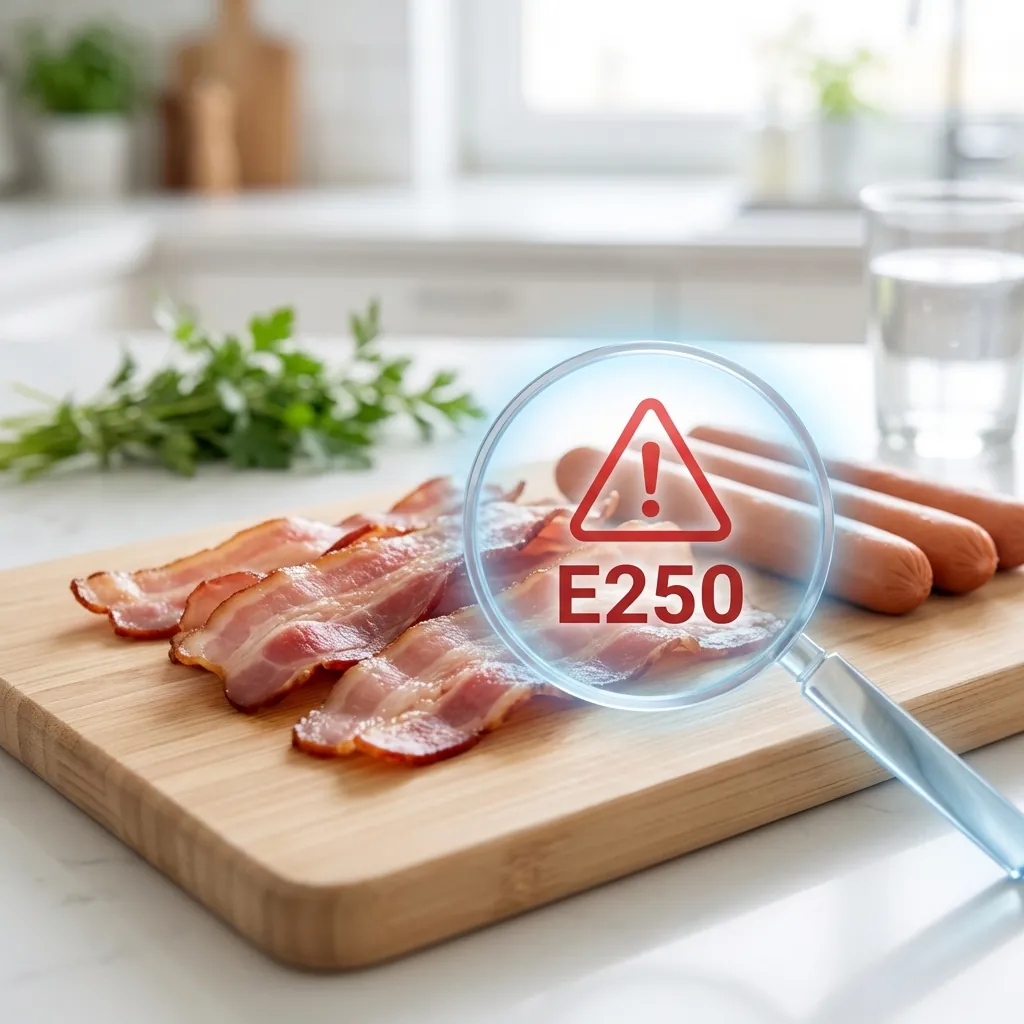
TL;DR
Sodium Nitrite (E250) is a preservative used to cure meats like bacon and hot dogs, giving them their characteristic pink color. However, when cooked or digested, it can form cancer-causing compounds. The World Health Organization classifies processed meats containing nitrites as carcinogenic. Kale rates E250 as Avoid (Red).
What is Sodium Nitrite (E250)?
Sodium Nitrite (E250) is a salt used extensively in the meat industry. It serves three main purposes:
- Preservation: It prevents the growth of harmful bacteria, specifically Clostridium botulinum, which causes botulism.
- Color: It interacts with meat proteins to fix that vibrant pink/red color. Without it, your bacon and hot dogs would look gray and unappetizing.
- Flavor: It contributes to that distinctive "cured" salty taste we associate with deli meats.
While it does an excellent job of preserving meat, the cost to human health is becoming increasingly clear.
Where is it found?
You will find E250 in the vast majority of processed and cured meats in the supermarket. Common offenders include:
- Bacon: Almost all standard bacon contains nitrites.
- Hot Dogs & Sausages: A staple ingredient for shelf life and color.
- Deli Meats: Ham, turkey, bologna, salami, and roast beef.
- Jerky: Used to keep dried meats safe and red.
- Canned Meats: Spam, corned beef, and others.
- Smoked Fish: Sometimes found in smoked added-value fish products.
Health Concerns: The Cancer Connection
The primary concern with Sodium Nitrite isn't the salt itself, but what happens to it inside your body and when cooked.
Formation of Nitrosamines
When sodium nitrite is exposed to high heat (like frying bacon) or the acidic environment of your stomach, it can react with amines (proteins) to form nitrosamines. Nitrosamines are well-documented carcinogens.
The WHO Ruling
In a landmark 2015 report, the World Health Organization's International Agency for Research on Cancer (IARC) classified processed meat as a Group 1 Carcinogen. This puts bacon and hot dogs in the same cancer-risk category as tobacco smoking and asbestos (though the magnitude of risk is lower, the certainty of the link is the same).
They concluded that consuming 50 grams of processed meat daily (about 2 slices of bacon) increases the risk of colorectal cancer by 18%.
Other Risks
High intake of nitrites is also linked to:
- Increased risk of leukemia in children (if consumed heavily by pregnant mothers).
- Thyroid issues.
- Respiratory problems.
Kale's Verdict: Avoid (Red)
At Kale, we prioritize long-term health over shelf life and aesthetics. Given the strong evidence linking nitrites to cancer, we rate Sodium Nitrite as Avoid (Red).
Risk Level: 🔴 Avoid
We believe that ingredients classified as Group 1 Carcinogens by the WHO have no place in a daily diet.
How to Avoid It
Navigating the meat aisle can be confusing, but here is how to stay safe:
- Check the Ingredients: Scan for "Sodium Nitrite", "E250", or "Sodium Nitrate" (E251), which converts to nitrite in the body.
- Use the Kale App: Scan any package to instantly see if E250 is present. We'll warn you with a red flag.
- Be Wary of "Uncured" or "No Nitrites Added": This is a common loophole. Many products claiming "No Nitrites Added*" actually use celery powder or celery juice. Celery is naturally high in nitrates, which act the exact same way as synthetic nitrites in the body. They effectively are cured, just naturally.
- Buy Fresh Meat: Stick to fresh chicken, beef, or pork that has no added ingredients.
- Cook Smart: If you do eat nitrate-containing meats, cook them at lower temperatures to reduce nitrosamine formation (bake instead of fry).
- Protective Foods: Vitamin C (ascorbic acid) inhibits the formation of nitrosamines. That's why E300 (Ascorbic Acid) is often added to bacon, or why having some orange juice with breakfast is a smart move.
Final Thoughts
Eating a hot dog at a baseball game once a year isn't going to kill you. But making processed meats a daily staple for breakfast or lunch carries real, proven risks. By swapping processed deli slices for fresh roasted turkey or choosing truly uncured options, you can significantly reduce your cancer risk.
Not sure if your "all-natural" turkey has hidden nitrites? Download Kale and scan it to find out instantly.
Make healthier food choices
Download Kale to scan barcodes and understand what's in your food.
Download for iOS