Nitrates (E251/E252): Why Beets Are Good but Bacon Is Bad
TL;DR
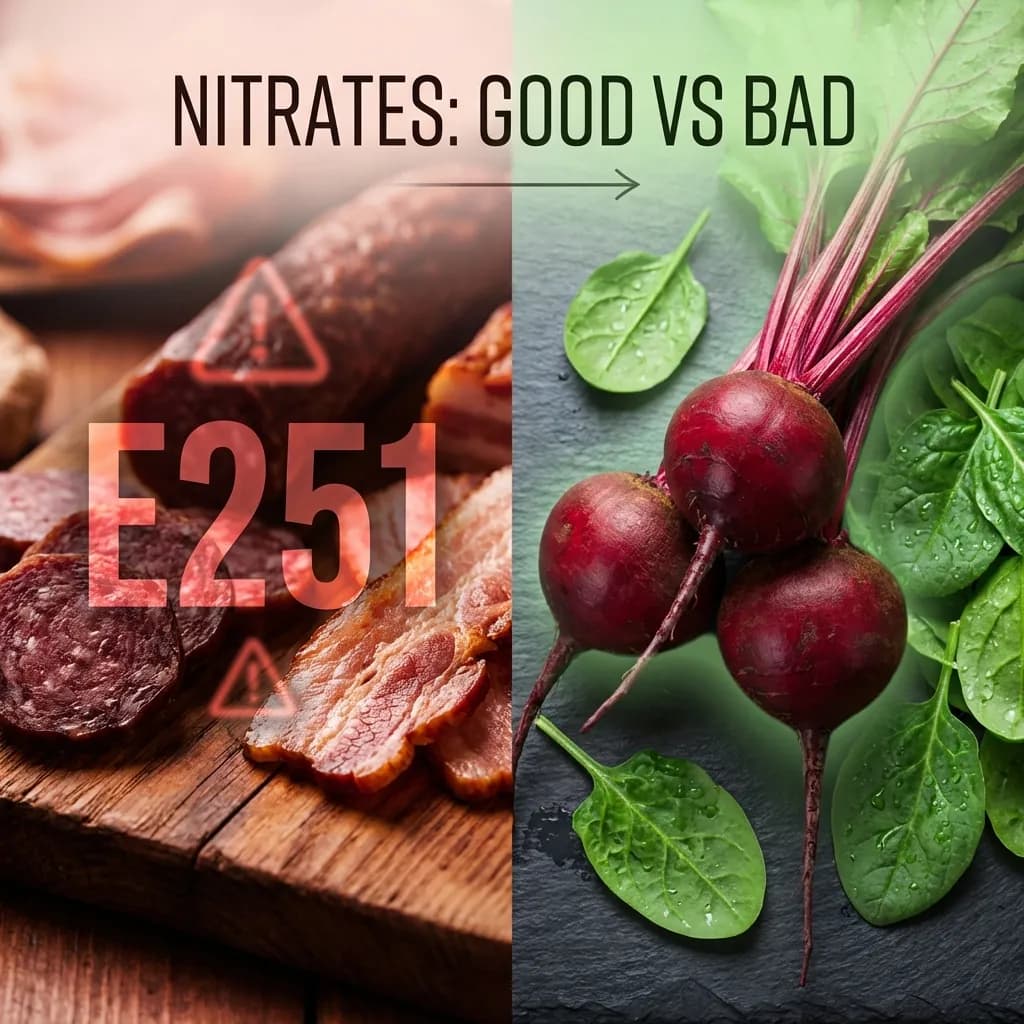
Nitrates (E251 Sodium Nitrate & E252 Potassium Nitrate) are used to cure meats and prevent bacteria. While nitrates occur naturally in vegetables like spinach and beets (where they are healthy!), the added nitrates in processed meats can convert into harmful nitrosamines, increasing cancer risk. Kale rates synthetic Nitrates as Avoid (Red) in processed meats.
What are Nitrates (E251/E252)?
Nitrates are chemical compounds composed of nitrogen and oxygen. In food processing, they appear as:
- E251: Sodium Nitrate
- E252: Potassium Nitrate
They are chemically very similar to nitrites (E250). In fact, nitrates often convert into nitrites through bacterial action during the curing process or digestion. Because of this conversion, they share many of the same risks.
Where are they found?
The Good: Natural Sources
Believe it or not, 80% of the nitrates in your diet likely come from vegetables!
- Leafy Greens: Spinach, arugula, lettuce.
- Root Vegetables: Beetroot, carrots, radishes.
- Celery: Naturally very high in nitrates.
The Bad: Processed Meats
Synthetic nitrates are added to:
- Dry Cured Meats: Prosciutto, country ham, dry sausages (salami, pepperoni).
- Bacon & Hot Dogs: Often used in combination with nitrites.
- Smoked Fish: For preservation and color.
Health Concerns: The "Nitrate Paradox"
Why are nitrates in spinach "good" but nitrates in bacon "bad"?
The Delivery System Matters
-
In Vegetables: Nitrates come packaged with Vitamin C (ascorbic acid) and antioxidants. These compounds prevent the nitrates from turning into harmful nitrosamines. Instead, your body converts them into Nitric Oxide (NO), a molecule that relaxes blood vessels, improves blood flow, and lowers blood pressure. That's why beet juice is a popular endurance supplement!
-
In Processed Meats: Added nitrates (E251/E252) are consumed with high levels of protein (amines) and often saturated fat / heme iron, but without the protective antioxidants. When cooked at high heat (like frying bacon) or digested in the stomach, these nitrates convert to nitrites, which then react with the meat protein to form Nitrosamines.
Cancer Risk
As with Nitrites (E250), the formation of nitrosamines is the primary danger. These compounds are classified as carcinogenic. Consuming nitrates in the context of processed meat is linked to an increased risk of organ cancers, particularly colorectal cancer.
Kale's Verdict: Avoid (Red) in Processed Foods
It is important to distinguish the source.
- Natural Nitrates (Vegetables): 🟢 Safe & Healthy
- Added Nitrates (E251/E252): 🔴 Avoid
Kale rates products containing E251 Sodium Nitrate or E252 Potassium Nitrate as Avoid (Red) because they are almost exclusively found in the processed meats that carry these cancer risks.
How to Avoid the Bad Kind
- Check the Label: Look specifically for "Sodium Nitrate" or "Potassium Nitrate".
- Scan with Kale: We'll flag E251 and E252 instantly.
- Eat Your Greens: Keep eating spinach and beets! The natural nitrates there are beneficial for your heart health.
- Watch out for "NO 2": Some supplements (like pre-workouts) contain concentrated nitrates. Unless they are derived from whole food sources (like beet root powder), exercise caution.
Final Thoughts
The story of nitrates teaches us that context is everything in nutrition. The exact same molecule can be a heart-healthy hero or a carcinogenic villain depending on what it's eaten with. By skipping the cured meats and loading up on leafy greens, you get all the benefits of nitric oxide without the risks of nitrosamines.
Curious about that "healthy" turkey jerky? Download Kale and verify if it's using added nitrates.
Make healthier food choices
Download Kale to scan barcodes and understand what's in your food.
Download for iOS