Sodium Benzoate (E211): The Preservative That Doesn't Mix Well With Vitamin C
TL;DR
Sodium Benzoate (E211) is a widely used preservative found in acidic foods like carbonated drinks, pickles, and lemon juice. Its biggest danger is chemical reaction: when exposed to heat or light in the presence of Vitamin C (Ascorbic Acid), it can convert into Benzene, a known carcinogen. It is also linked to hyperactivity in children. Kale rates it as Caution (Orange).
What is Sodium Benzoate (E211)?
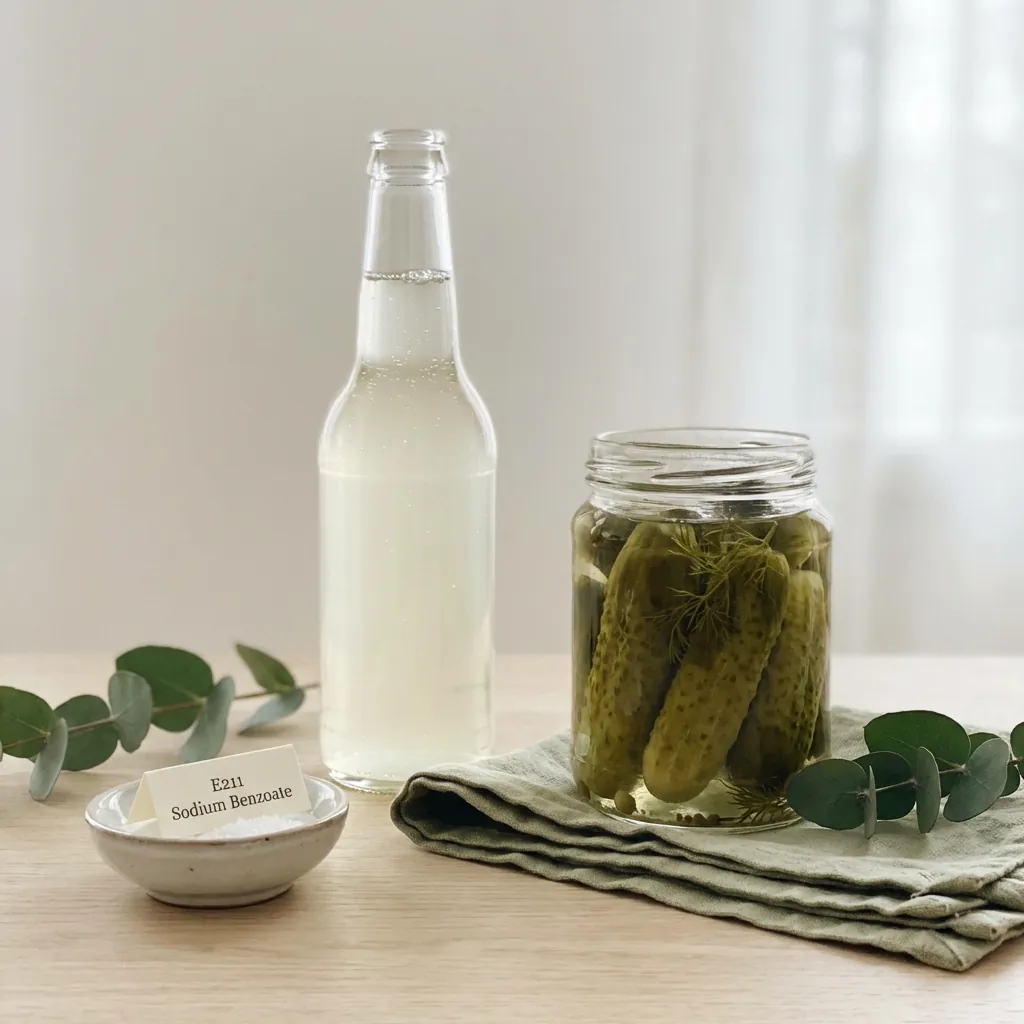
It is the sodium salt of benzoic acid. It works by inhibiting the growth of mold, yeast, and some bacteria. It only works in acidic environments (pH below 4.5), which is why you'll never see it in milk or meat, but you'll see it in almost every bottle of conventional soda or jar of supermarket pickles.
Where is it found?
If it's sour or fizzy and sits on a shelf, check the label.
- Soft Drinks: The #1 source. Most non-cola sodas (Mountain Dew, Sprite, Fanta) use it.
- Pickles & Relish: Keeps jarred vegetables crisp and mold-free.
- Fruit Juices: Lemon and lime juices, and some fruit punches.
- Salad Dressings: Vinaigrettes and Italian dressings.
- Condiments: Soy sauce, mustard, and maple syrup.
Health Concerns
1. The Benzene Effect
This is a serious chemical reaction. When Sodium Benzoate is combined with Ascorbic Acid (Vitamin C) and exposed to heat or light, it can form Benzene. Benzene is not a food additive; it's a carcinogen linked to leukemia.
While the beverage industry has reformulated many drinks to avoid this trigger since a scandal in the early 2000s, it hasn't been eliminated entirely.
2. Hyperactivity
The famous "Southampton Study" (which led to warning labels for food dyes in Europe) also implicated Sodium Benzoate. The study found that a mixture of E211 and artificial colors increased hyperactivity in children. Even without the dyes, many experts advise parents of children with ADHD to avoid benzoates.
3. Inflammation
Some animal studies suggest that sodium benzoate may trigger inflammation and oxidative stress in the body, potentially contributing to chronic disease over time.
Kale's Verdict: Caution (Orange)
Kale rates E211 (Sodium Benzoate) as Caution (Orange).
It is a "Caution" rather than an "Avoid" because, on its own and in small amounts, it is readily excreted by the body. However, the risk of benzene formation and the link to behavioral issues make it an ingredient worth minimizing.
We rate it Orange to warn you to:
- Check if it's paired with Vitamin C (Ascorbic Acid).
- Monitor consumption if you have children with attention issues.
How to Avoid It
- Check Your Soda: Many diet sodas use it. Look for "Sodium Benzoate" or "Benzoic Acid."
- Scan with Kale: We'll highlight it so you can verify the other ingredients (like Vitamin C).
- Buy Refrigerated Pickles: The pickles in the refrigerated section (like Bubbies or Claussen) usually use vinegar and salt for preservation, not benzoates.
- Squeeze Real Lemons: Bottled lemon juice is a major source of E211. Fresh lemons are preservative-free.
Final Thoughts
The fact that a common preservative can accidentally turn into a carcinogen inside a soda bottle is a good reminder of why whole foods are safer. Chemistry experiments belong in a lab, not in your lunchbox.
Is your pickle jar safe? Download Kale to scan for hidden preservatives.
Make healthier food choices
Download Kale to scan barcodes and understand what's in your food.
Download for iOS