Sucralose (E955): What Happens When You Cook It?
TL;DR
Sucralose (E955) is an artificial sweetener made by chlorinating sugar molecules. It is 600 times sweeter than sugar and is famous for being "heat stable," meaning you can bake with it. However, new research suggests that heating it to high temperatures can form harmful chloropropanols, and it may damage DNA (genotoxic). Kale rates it as Caution (Orange).
What is Sucralose (E955)?
Marketing campaigns famously claimed, "It's made from sugar, so it tastes like sugar." While true, the process involves replacing three hydrogen-oxygen groups on the sugar molecule with chlorine atoms.
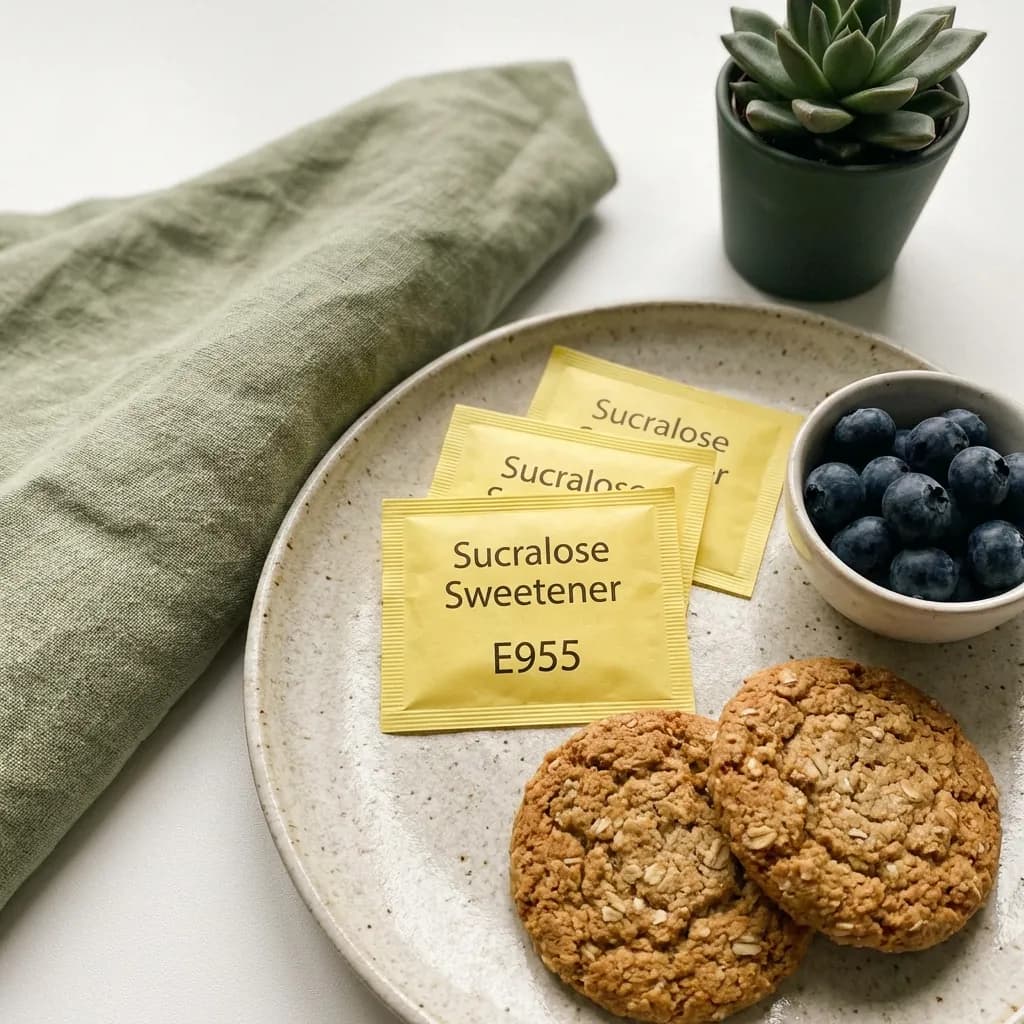
This change makes the molecule unrecognizable to the body, so it passes through undigested, meaning zero calories. Commercially, it's best known as Splenda (the yellow packet).
Where is it found?
Because it stays sweet when hot, it is the go-to sweetener for diet baking.
- Baked Goods: "No Sugar Added" cakes, cookies, and muffins.
- Tabletop Sweeteners: The ubiquitous yellow packets.
- Dairy: Light yogurts and flavored milk.
- Sauces: Sugar-free BBQ sauce, ketchup, and maple syrup alternatives.
- Drinks: Diet sodas and energy drinks (often mixed with Ace-K).
Health Concerns
1. Heating Risks
This is the biggest recent concern. While marketed as heat-stable, studies have found that when sucralose is heated to temperatures common in baking (above 350°F / 180°C), it can degrade into chloropropanols, a class of compounds that are potentially toxic.
2. Genotoxicity (DNA Damage)
In 2023, a study indicated that sucralose-6-acetate, a chemical impurity found in commercial sucralose, is "genotoxic," meaning it can break DNA strands. The researchers advised people to stop taking sucralose.
3. Gut Health
Like other artificial sweeteners, sucralose has been shown to reduce beneficial gut bacteria by up to 50% in animal studies. A healthy microbiome is crucial for immunity and mood regulation.
Kale's Verdict: Caution (Orange)
Kale rates E955 (Sucralose) as Caution (Orange).
While it is generally considered safer than aspartame by some, the new evidence regarding DNA damage and the formation of toxins during baking is worrying.
If you are using it in cold applications (like sweetening iced tea), the risk is lower. But we strongly advise against baking with it or buying "diet" baked goods that use it.
How to Avoid It
- Skip the Yellow Packet: Reach for the green packet (Stevia) or raw honey instead.
- Scan with Kale: We'll alert you if your "Keto Cookie" is loaded with E955.
- Read Labels on "Light" Products: Yogurt and ice cream are common hiding spots.
- Bake with Natural Options: Monk Fruit and Erythritol are better heat-stable alternatives for low-carb baking.
Final Thoughts
We chlorinate our pools to kill bacteria. Do we really want to chlorinate our sugar? With safer plant-based sweeteners widely available, relying on a chlorinated laboratory creation feels like a step backward for health.
Is your sugar-free pudding safe? Download Kale and verify the ingredients.
Make healthier food choices
Download Kale to scan barcodes and understand what's in your food.
Download for iOS